A large chocolate company had just reduced the size of their chocolate bar just months before I began consulting for them in the mid-1980s. The objective for making this kind of move was that it would be a cost-saving mechanism. Guess what happened?
They unintentionally lost their customers’ trust.
At the same time, they made the decision to increase board salaries and the CEO’s salary. It was an unsustainable and unhealthy approach that did twice as much harm as it did good: any cost-savings from downsizing the chocolate bar was eaten by inflating executive salaries, and they lost a portion of their customer base.
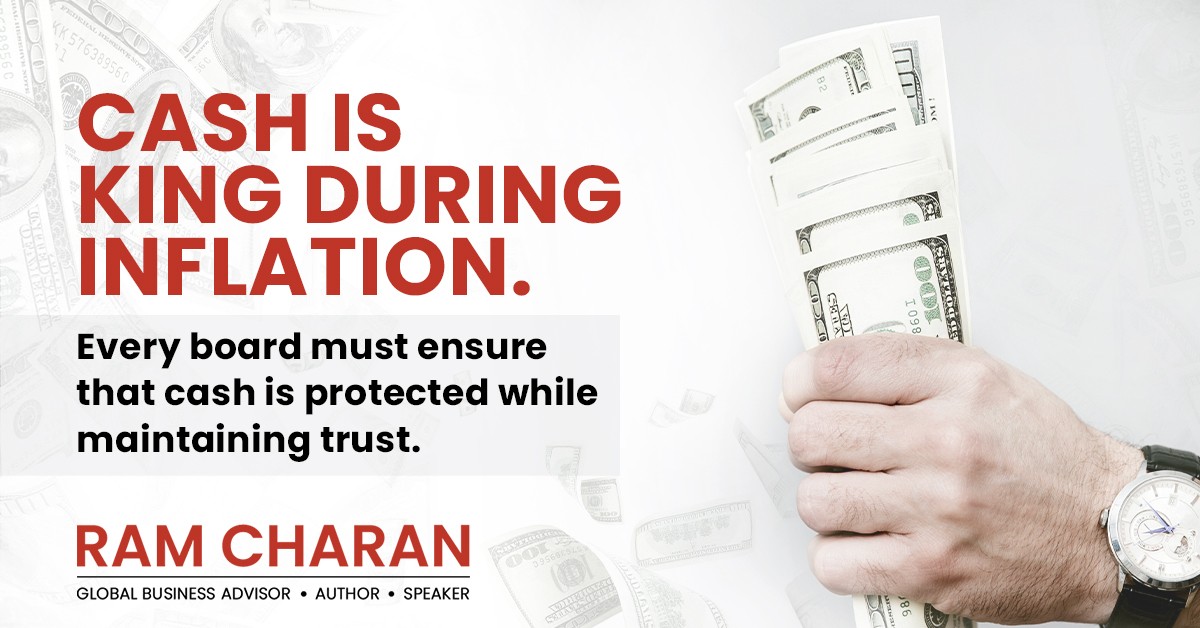
In today's business climate, where profits are being squeezed by inflation, you have to do two things to keep up: boost prices and cut costs while giving customers good value. At the same time, when the economy is unstable, the future is uncertain, and debt is on the rise, one of the most valuable assets your business can have is cash. Let me be clear - cash is king during a recession. This means from top to bottom, look at cash saving measures, as well as any potential unintended fallout, to maintain and grow liquid capital.
Compensation management is critical for your organization, and a board of directors’ compensation committee must be engaged. This committee should understand investor expectations, current market conditions, industry best practices, and overall organizational growth strategies in order to support talent retention and create competitive compensation packages. With the current inflationary turbulence, remember: inflation can exaggerate revenue and profits, and incentives should be offered on an inflation-adjusted basis.
I serve on two boards and I have observed how excessive compensation is evaluated. First, they look at the normal industry-set rates among competitors, those companies with similar revenue, margins, demand, and services. Then, the board will come to some reconciliation between payment and savings. At the end of the day, this decision will impact not just the CEO, not just the board, but the overall trust that the customer puts in the brand and the overall growth of the business.
So, the answer can be simple - Use caution to prevent excessive executive disbursements, especially during these inflationary times. They come at the expense of the customer. It is not a good use of capital allocation. I see many boards implementing new compensation strategies. Incentive pay can still be a good tool during inflation and recession, as long as the board executes control and asks themselves if compensation is becoming excessive within the context of the organization’s financial reality.
Many companies must keep in mind to never sacrifice the brand of the company during inflation as cost-cutting measures take place. Do not lose customer trust.
I’ve amassed over 60 years of consulting experience, working with businesses across the globe. Within that 60 years, I consulted through two recessions, and I’ve compiled the knowledge and insight I’ve learned into my new book, Leading Through Inflation, including advice on maintaining customer trust, evaluating brand and growth strategies, and coaching leaders through the finer details of inflationary management.
Order Today: https://leadingthroughinflation.com/